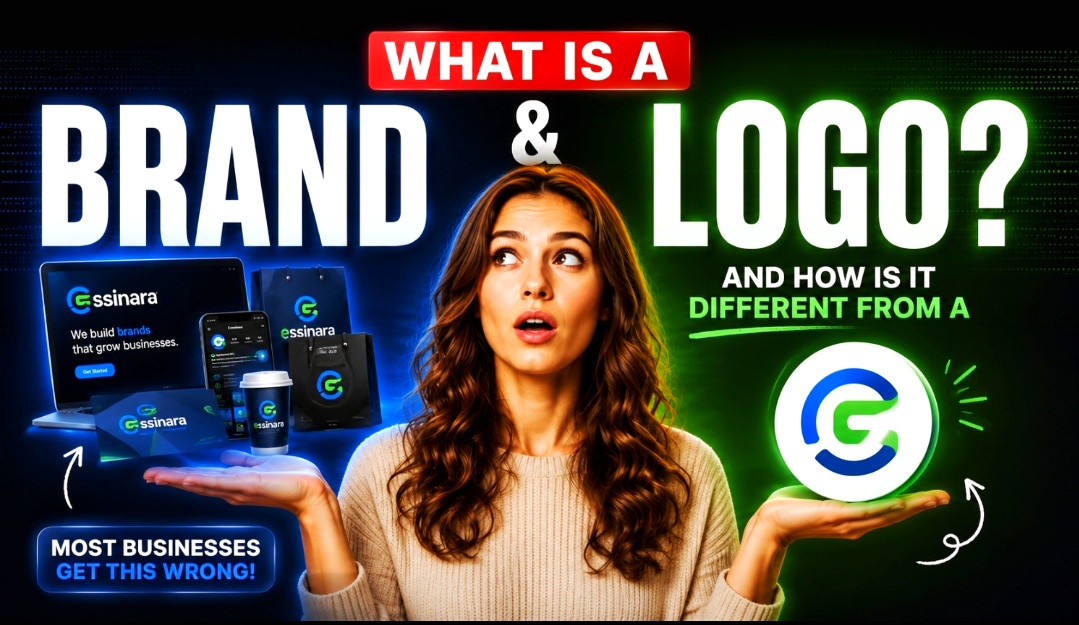
WHAT IS A BRAND AND HOW IS IT DIFFERENT FROM A LOGO?
If someone asked you right now — what is your brand?
Most business owners would point to their logo.
And while that answer is understandable, it is also incomplete. A logo is just one small piece of something much bigger.
Confusing your logo with your brand is one of the most common and costly mistakes in business because it means investing in the visible surface of your business while neglecting the deeper foundation that actually builds trust, loyalty, and lasting recognition.
This guide explains exactly what a brand is, how it differs from a logo, and why this distinction matters for any business that wants to grow.
WHAT IS A LOGO?
A logo is a visual symbol that identifies your business.
It could be a combination of letters, an icon, a wordmark, or an abstract graphic. It appears on your website, business cards, packaging, social media profiles, and anywhere else your business is represented visually.
A logo serves one primary function — identification. It helps people recognize which business they are looking at.
That is important, but it is only the beginning.
WHAT IS A BRAND?
A brand is the total experience a person has with your business across every interaction, every touchpoint, and every impression.
It is not a single thing. It is the combination of many elements working together.
The way your business looks through its visual identity.
The way your business sounds through its tone and voice.
The way your business makes people feel.
What people say about you when you're not in the room.
The promises you make and whether you keep them.
The values that guide every decision you make.
The story behind why your business exists.
A brand lives in the minds and hearts of your customers. It is built over time through consistent experiences, reliable delivery, and genuine connection.
Amazon is a brand. You know what to expect when you order from them—speed, reliability, and easy returns. That expectation is their brand.
Apple is a brand. You know how their products will look, feel, and work before you even open the box. That consistency is their brand.
Nike is a brand. When you see the swoosh, you don't just see a logo—you feel something. That feeling is their brand.
THE KEY DIFFERENCES
Understanding the difference becomes clearer when you compare them.
A logo is a visual mark.
A logo is designed once.
A logo is seen by people.
A logo identifies the business.
A logo can be created in a day.
A brand is a complete experience.
A brand is built over time.
A brand is felt by people.
A brand defines the business.
A brand takes months and years to establish.
A logo is something you design.
A brand is something you build.
WHY THIS DISTINCTION MATTERS
Many businesses invest heavily in a beautiful logo and then wonder why customers aren't connecting with them or coming back.
The reason is almost always the same—they built a visual identity without building the deeper brand underneath it.
A strong logo on top of a weak brand is like a beautiful storefront with an empty building behind it. It might attract people once, but it won't keep them coming back.
On the other hand, a business with a strong brand can survive a logo redesign because the trust, recognition, and loyalty live deeper than any visual mark.
Think about the brands you personally love and trust. Chances are your loyalty has more to do with how they made you feel, the experiences you've had, and the values they represent than just how their logo looks.
WHAT MAKES A STRONG BRAND?
A strong brand has several qualities working together.
CLARITY
A strong brand knows exactly what it stands for, who it serves, and why it exists. That clarity comes through in every communication and every decision.
CONSISTENCY
A strong brand looks, sounds, and feels the same everywhere. Whether someone encounters you on Instagram, your website, in an email, or in person, the experience is recognizably the same.
AUTHENTICITY
A strong brand is built on genuine values and real promises kept over time. Customers are remarkably good at detecting when a brand is pretending versus when it is genuine.
EMOTIONAL CONNECTION
The strongest brands don't just serve a functional need. They connect with something deeper—identity, aspiration, belonging, and trust.
REPUTATION
Ultimately, a brand is what others say about you when you're not present. That reputation is earned through consistent delivery over time, not designed in a logo file.
SO WHERE DOES THE LOGO FIT?
The logo is the face of the brand.
It is the most visible element of your brand identity, and it matters. A professionally designed logo communicates quality and professionalism at a glance.
But it works best when it sits on top of a brand that has been thoughtfully built with a clear purpose, defined values, a consistent voice, and a track record of delivering real value to real people.
A great logo amplifies a strong brand.
It cannot replace one.
BUILDING BOTH — WHERE TO START
If you are starting from scratch, follow this order.
DEFINE YOUR BRAND FOUNDATION FIRST
Why does your business exist?
Who do you serve?
What do you stand for?
What makes you different?
DEFINE YOUR BRAND IDENTITY
Choose the colors, fonts, visual style, and tone that reflect your brand personality and connect with your audience.
DESIGN YOUR LOGO
Now that you know who you are, design a logo that represents your brand.
APPLY IT CONSISTENTLY
Use your brand elements consistently across every touchpoint from day one.
BUILD THROUGH EXPERIENCE
Deliver on your promises.
Every positive customer experience strengthens your brand's reputation.
Every negative experience weakens it.
HOW ESSINARA CAN HELP
At Essinara, we understand that a logo is just the beginning.
We help businesses build complete brand identities, starting with the strategic foundation and working through the visual identity, brand guidelines, and consistent application across every platform.
Whether you're building a brand from scratch or strengthening an existing one, Essinara is ready to help you create a brand that people recognize, trust, and remember.
What Is a Brand and How Is It Different From a Logo?